
Open Basic Education
What is OBE
Open Basic Education (OBE) is a nationally recognized alternative education program developed by the National Institute of Open Schooling (NIOS) to provide foundational and upper-primary education through a flexible, learner-centered approach. It is designed for children who may not benefit fully from conventional schooling systems and require individualized pacing, adaptive curriculum delivery, and inclusive teaching methods.
The program emphasizes functional literacy, numeracy, life skills, and conceptual understanding, rather than rote learning. OBE is implemented through accredited agencies and follows a structured yet flexible framework, allowing learners to progress based on their readiness and learning needs. Successful completion leads to certification equivalent to formal schooling, ensuring continuity in academic pathways.
Who it is for
OBE is primarily designed for children between 6 to 14 years of age, in alignment with the Right to Education (RTE) framework. It also supports older learners, adolescents, and adults who wish to re-enter formal education after a gap.
The program is particularly suitable for:
- Out-of-school children and school drop-outs who require reintegration into the education system
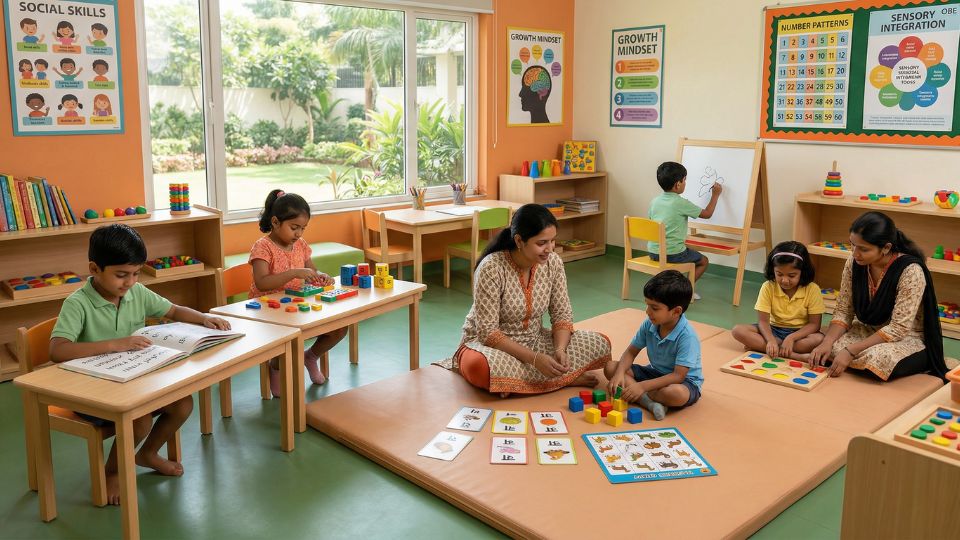
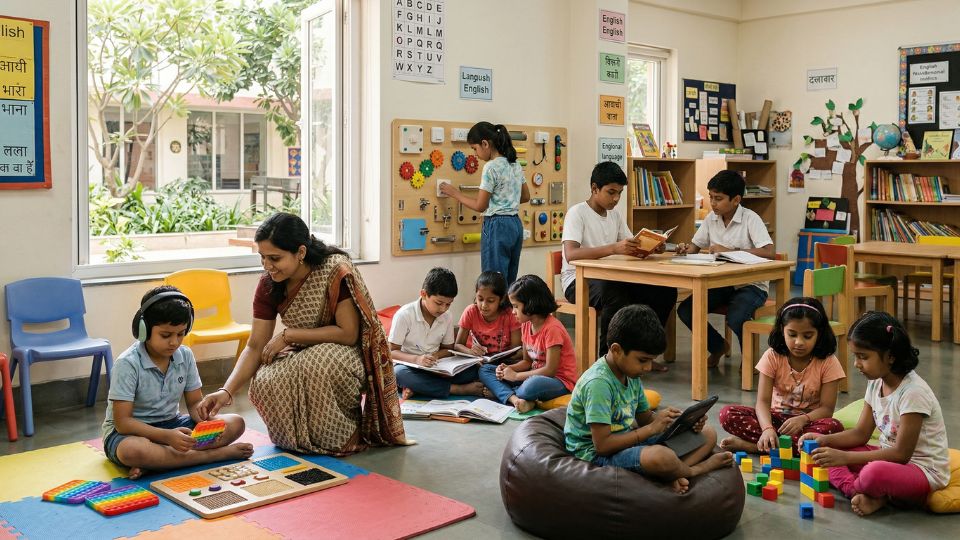
- Neurodiverse learners (including children with autism, ADHD, learning difficulties) who benefit from individualized instruction
- Children facing academic, social, or environmental barriers in mainstream schooling
- Learners who require flexible schedules and alternative learning environments
By accommodating diverse learning needs, OBE ensures that education remains accessible, inclusive, and developmentally appropriate.
Curriculum and Learning Approach
The OBE curriculum is designed to promote conceptual clarity, functional skills, and real-life application of knowledge. It integrates academic subjects with life skills, environmental awareness, and basic vocational exposure, enabling holistic development.
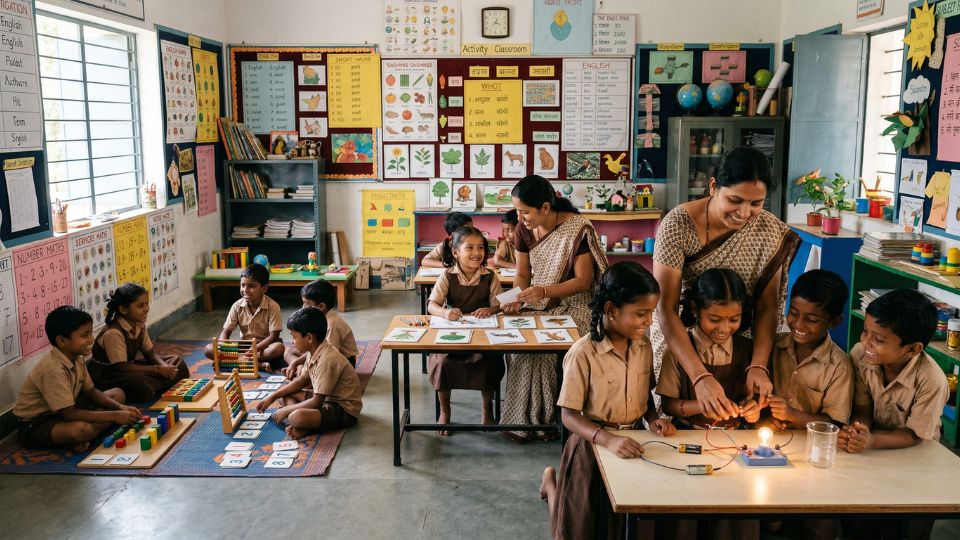
Teaching methodologies are multi-modal and learner-centric, incorporating:
- Activity-based and experiential learning
- Visual, auditory, and kinesthetic teaching strategies
- Continuous and formative assessment methods
- Contextual learning linked to everyday experiences
This approach supports children in developing independent thinking, problem-solving abilities, and confidence in learning, rather than relying solely on memorization.
Levels and Academic Equivalence
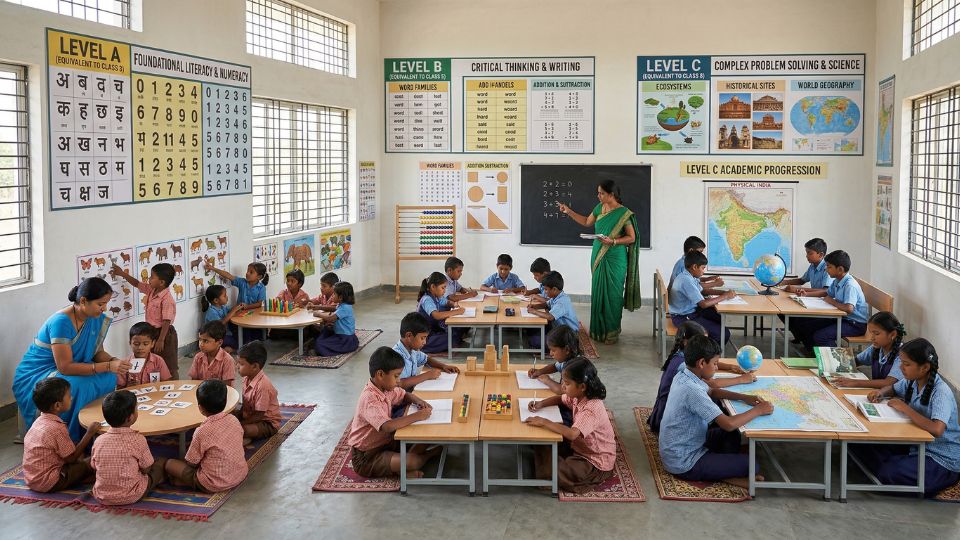
OBE is structured into three progressive levels that correspond to stages within the formal education system:
- Level A: Equivalent to Classes 1–3 (ages 6–8 years)
- Level B: Equivalent to Classes 4–5 (ages 9–11 years)
- Level C: Equivalent to Classes 6–8 (ages 12–14 years)
Each level focuses on age-appropriate competencies in literacy, numeracy, and environmental studies, ensuring gradual and meaningful progression.
Upon completion of Level C, learners can transition to NIOS Secondary (Class 10 equivalent) or reintegrate into mainstream schooling, depending on their readiness and goals.
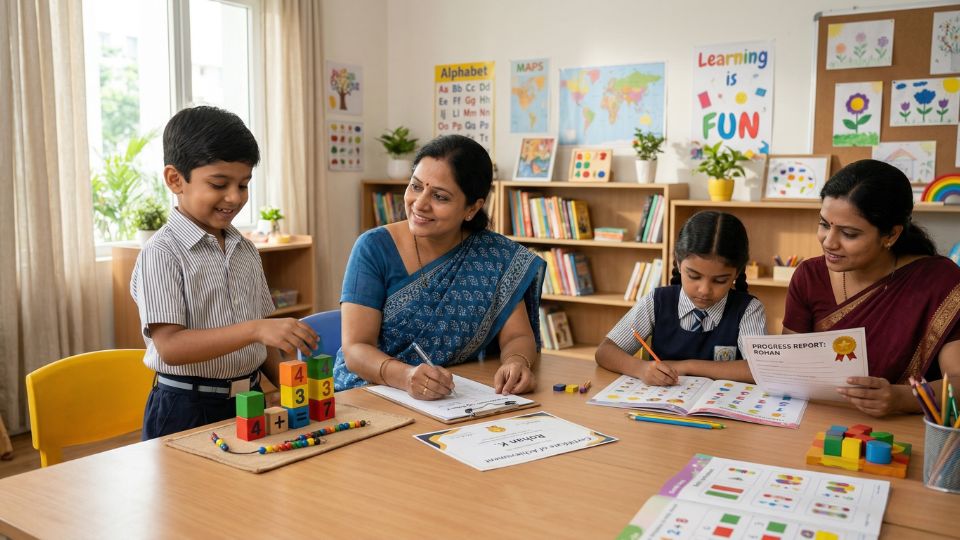
Assessment and Certification
OBE follows a continuous and competency-based assessment system, where learners are evaluated on their understanding, application, and skill development rather than only written examinations.
Assessments are conducted through:
- Worksheets and activity-based evaluations
- Oral responses and practical demonstrations
- Periodic progress reviews
Certification is awarded by NIOS, making it nationally recognized and valid for further education and vocational pathways.
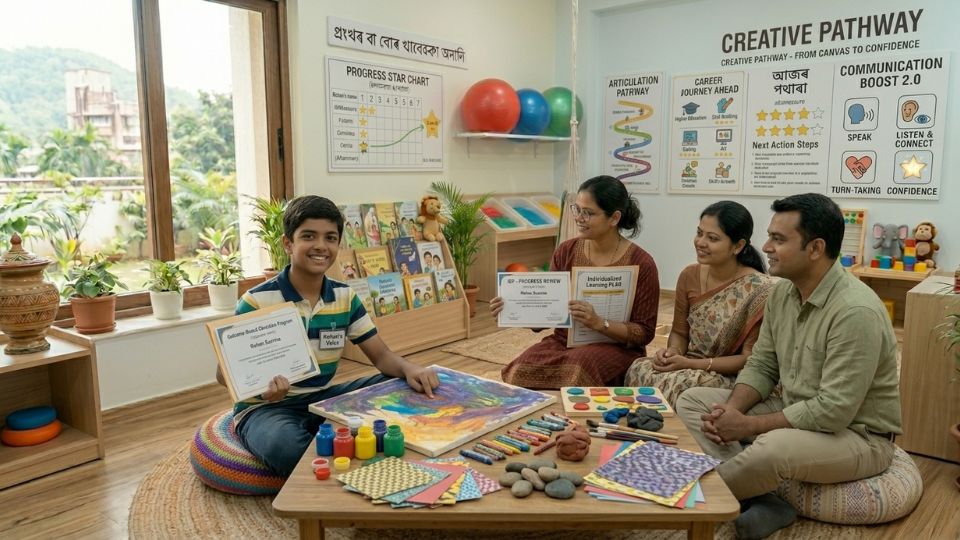
Bridging to Mainstream and Lifelong Learning
OBE follows a continuous and competency-based assessment system, where learners are evaluated on their understanding, application, and skill development rather than only written examinations.
Assessments are conducted through:
- Worksheets and activity-based evaluations
- Oral responses and practical demonstrations
- Periodic progress reviews
Certification is awarded by NIOS, making it nationally recognized and valid for further education and vocational pathways.
Curriculum and Learning Materials
Learners study language, mathematics, environmental studies and other foundational areas, with additional subjects introduced at higher levels. NIOS publishes level-wise curricula and books, including EVS and foundational computer skills where prescribed. Materials are available in multiple languages.
Assessment and Certification
OBE uses age-appropriate assessments with flexible scheduling through accredited agencies. Successful learners receive a jointly signed certificate from NIOS and the accredited agency after meeting subject requirements, which is accepted as equivalent to the respective classes in the school system.
How Urjabodh integrates OBE
At Urjabodh, OBE sits inside a holistic framework that combines therapeutic care and individualized training. This approach helps learners progress academically while building communication, regulation and independence.
Individual Learning Plans align OBE subjects with each child’s strengths, therapy goals and sensory profile.
Integrated supports include remediation, speech, occupational and behaviour therapy that directly reinforce classroom targets.
Parent guidance covers home routines, study strategies and exam accommodations so families feel confident at every step.