
Our assessment program at Urjabodh is designed to develop a deep understanding of each child’s unique learning profile. Every child thinks, learns, and processes information differently, and our assessment process helps us identify those individual patterns. Through a combination of clinical observations, screenings, structured evaluations, and standardized psychometric assessments, we gain insight into a child’s cognitive abilities, learning style, emotional functioning, and behavioural patterns.
These insights allow us to identify both strengths and areas where additional support may be needed, enabling us to create meaningful and personalized intervention plans that help children grow with confidence and clarity.
Comprehensive Evaluation
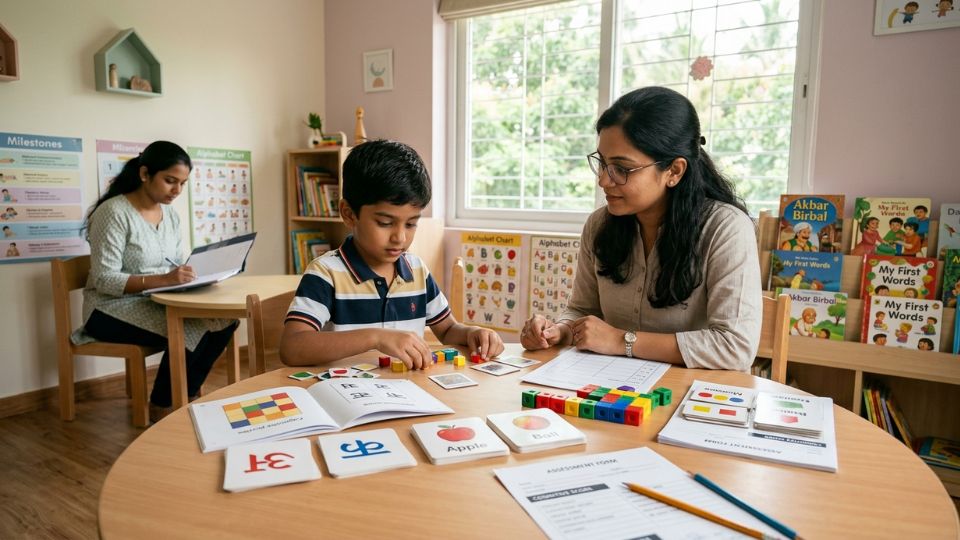
At Urjabodh, we conduct a thorough evaluation of a child’s cognitive, academic, social, and emotional development using structured and research-based tools. These assessments help us understand how a child processes information, solves problems, focuses attention, and interacts with their environment.
Our comprehensive evaluation process may include:
- Cognitive ability assessment
- Academic skill assessment (reading, writing, mathematics)
- Attention and executive functioning evaluation
- Behavioural and emotional screening
- Social and adaptive functioning assessment
By combining multiple sources of information—including standardized testing, clinical interviews, and behavioural observations—we develop a holistic understanding of the child’s strengths, challenges, and potential.
Psychometric Assessments for Diagnosis
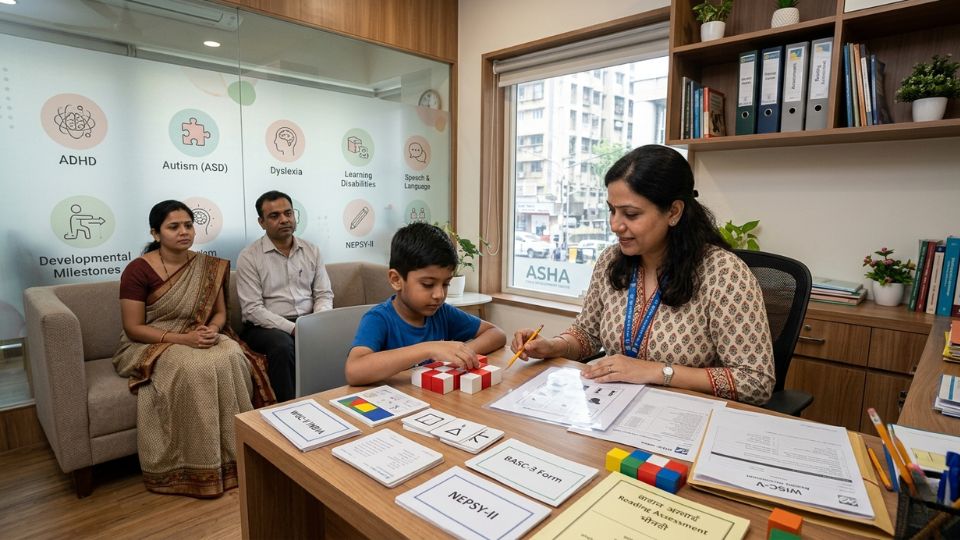
Urjabodh also conducts psychometric assessments, which are standardized, scientifically validated tools used to assess different aspects of a child’s cognitive, behavioural, and emotional functioning. These assessments are often used to identify and diagnose specific developmental, learning, or psychological concerns.
Psychometric assessments can help identify conditions such as:
- Learning Disabilities (dyslexia, dysgraphia, dyscalculia, dyspraxia)
- Attention Deficit Hyperactivity Disorder (ADHD)
- Autism Spectrum Disorder (ASD)
- Intellectual or cognitive developmental concerns
- Emotional and behavioural difficulties
- Language and communication challenges
These tools provide objective and reliable data that help professionals understand the child’s functioning more clearly. Psychometric evaluations are conducted using standardized instruments administered by trained professionals, ensuring accuracy and validity in the results.
The findings from these assessments help parents, educators, and therapists gain a clear diagnostic understanding, which is essential for planning appropriate interventions and educational accommodations.
Identifying Learning Needs and Support
Through our detailed assessment process, we identify specific learning profiles, developmental needs, and areas where targeted support may be beneficial. For example, a child may struggle with attention, processing speed, working memory, or specific academic skills such as reading comprehension or writing.
Once these areas are identified, we are able to recommend focused interventions and support strategies, which may include:
- Cognitive development programs
- Behavioural interventions
- Speech and language therapy
- Academic skill support
- Emotional and social skill development
Understanding these needs early allows us to design support systems that are proactive rather than reactive, helping children build skills before difficulties become more overwhelming.
Personalized Action Plans
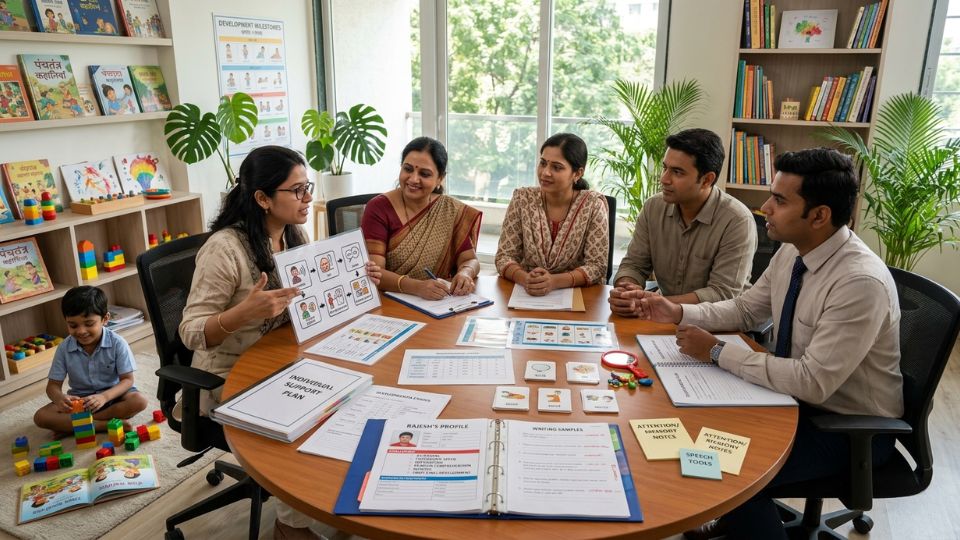
Following the completion of the assessment, we prepare a comprehensive report and individualized action plan. This plan outlines the key findings from the evaluation and provides clear recommendations for the next steps in supporting the child’s development.
The action plan may include:
- Recommended therapies or intervention programs
- Strategies for parents to support the child at home
- Academic accommodations or classroom strategies
- Skill-building activities to strengthen cognitive or emotional development
We believe that the most effective support for a child comes from collaboration between professionals, parents, and educators. Therefore, our team works closely with families and schools to ensure that the recommended strategies are implemented in a consistent and supportive manner.

Supporting Every Child’s Growth
At Urjabodh, assessments are not just about identifying challenges—they are about understanding the whole child. By recognizing both strengths and areas of difficulty, we help children build confidence in their abilities while receiving the guidance and support they need.
Our goal is to ensure that every child receives the right support, at the right time, in the right way, empowering them to learn, grow, and reach their full potential.