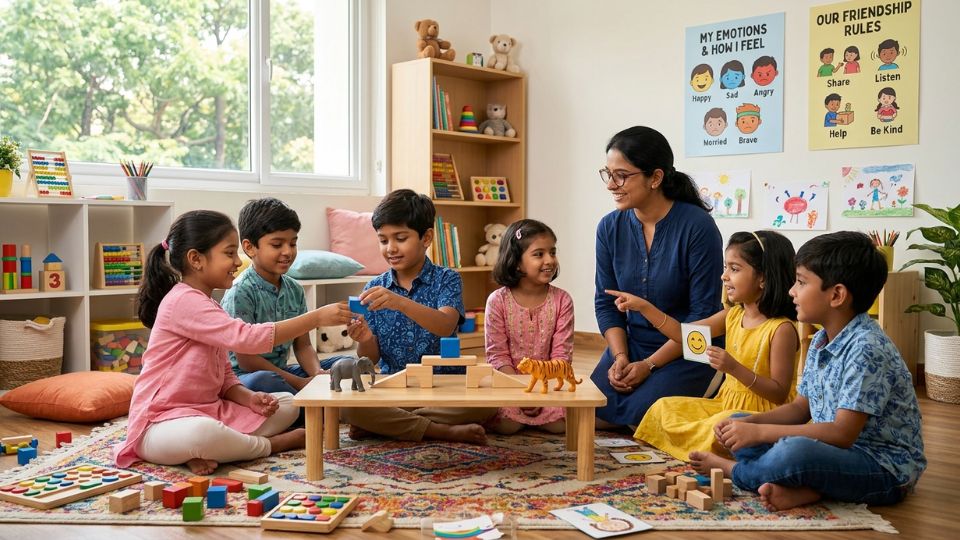
Play Therapy is a developmentally appropriate, evidence-informed intervention that utilizes play as a primary medium for communication, emotional expression, and psychological processing. Recognizing that children often lack the verbal ability to articulate complex emotions, this approach leverages symbolic and structured play to access their internal experiences in a safe and supportive environment.
The program aims to enhance emotional regulation, social competence, and adaptive coping skills, while addressing behavioural and emotional challenges through guided therapeutic interactions.
Understanding Through Play
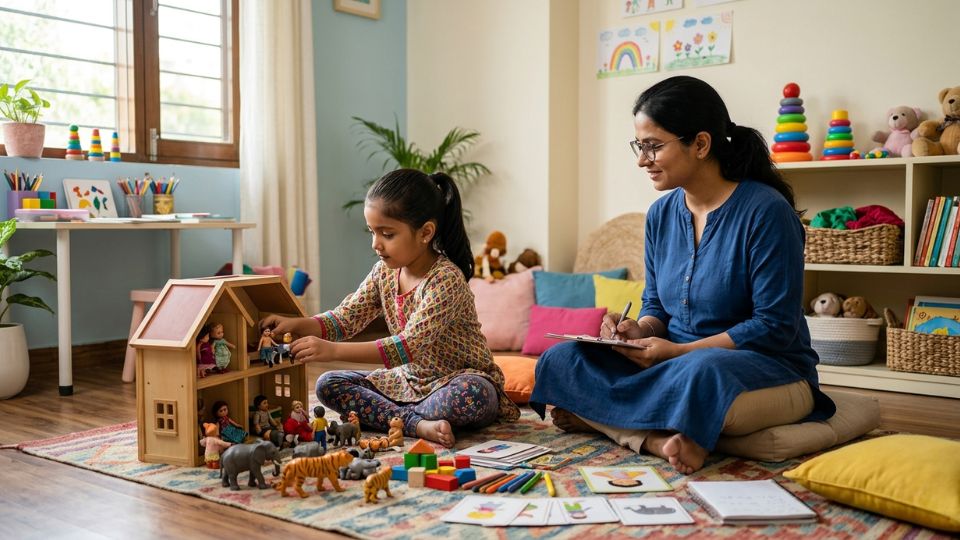
Children naturally communicate through play, making it a powerful tool for assessment and intervention. During sessions, therapists observe play themes, behaviours, and interaction patterns to gain insight into the child’s emotional state, interpersonal experiences, and underlying concerns.
Through the use of toys, storytelling, art-based activities, and role-play, children are supported in expressing feelings, processing experiences, and making sense of their environment. This process helps in identifying areas such as anxiety, frustration, trauma responses, or social difficulties in a non-threatening manner.
Structured Therapeutic Play Interventions
Play Therapy at Urjabodh integrates principles from various therapeutic frameworks to ensure both emotional and skill-based development. Techniques are designed to balance child-led exploration with therapist-guided intervention, allowing for both expression and structured learning.
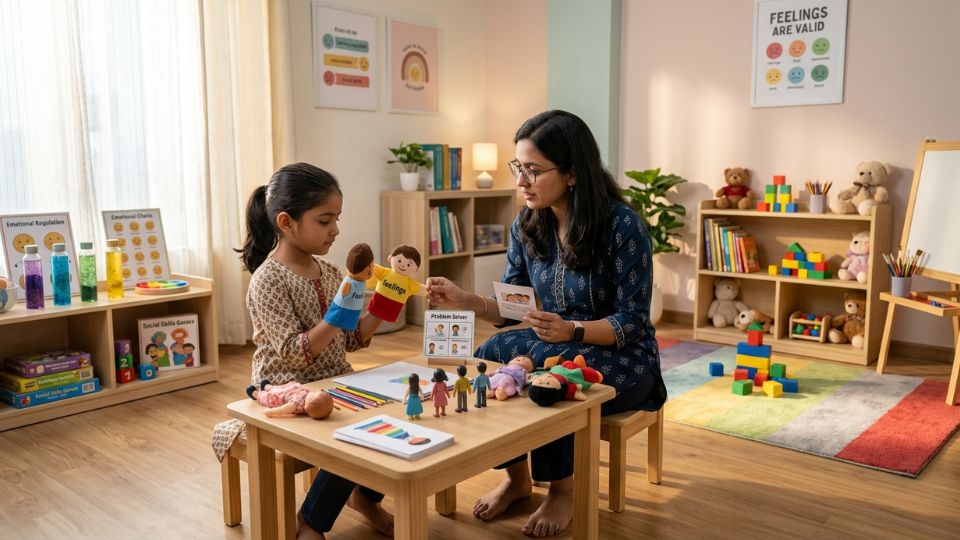
In practice, therapists use carefully selected materials such as dolls, puppets, art supplies, sensory tools, and games to create therapeutic scenarios. Children may engage in role-play, storytelling, or imaginative play, through which they project their thoughts and emotions. The therapist gently guides the interaction—helping the child label feelings, explore alternative responses, and build problem-solving skills—without disrupting the natural flow of play.
Sessions may be non-directive, where the child leads and the therapist follows to understand their inner world, or directive, where specific activities are introduced to target particular skills such as emotional regulation, social interaction, or behaviour management.
Why Play Therapy is Effective for Children
Play Therapy is particularly effective because it aligns with a child’s natural mode of learning and expression. Unlike adults, children often lack the cognitive and verbal maturity to articulate complex emotions, and play provides a safe and familiar medium through which they can communicate freely.
Through play, children are able to externalize internal conflicts, process difficult experiences, and experiment with new behaviours in a controlled and supportive environment. It reduces resistance to therapy, increases engagement, and allows therapists to work at the child’s developmental level.
Additionally, play-based interventions support the development of neural pathways related to emotional regulation, social interaction, and problem-solving, making learning both meaningful and long-lasting. This makes Play Therapy not only effective for addressing challenges such as anxiety, behavioural concerns, and social difficulties, but also valuable for promoting overall emotional and psychological well-being.
Building Emotional and Social Competence
A key focus of Play Therapy is the development of:
- Emotional awareness and regulation
- Communication and expressive skills
- Social interaction and peer engagement
- Problem-solving and adaptive coping strategies
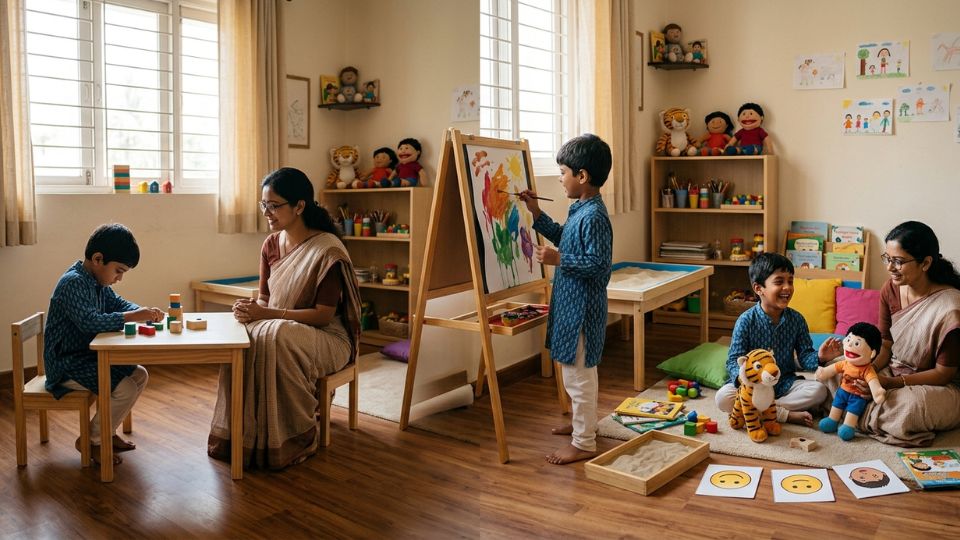
Through repeated and supported experiences, children learn to identify, express, and manage their emotions, while also developing the skills needed to navigate social situations more effectively.