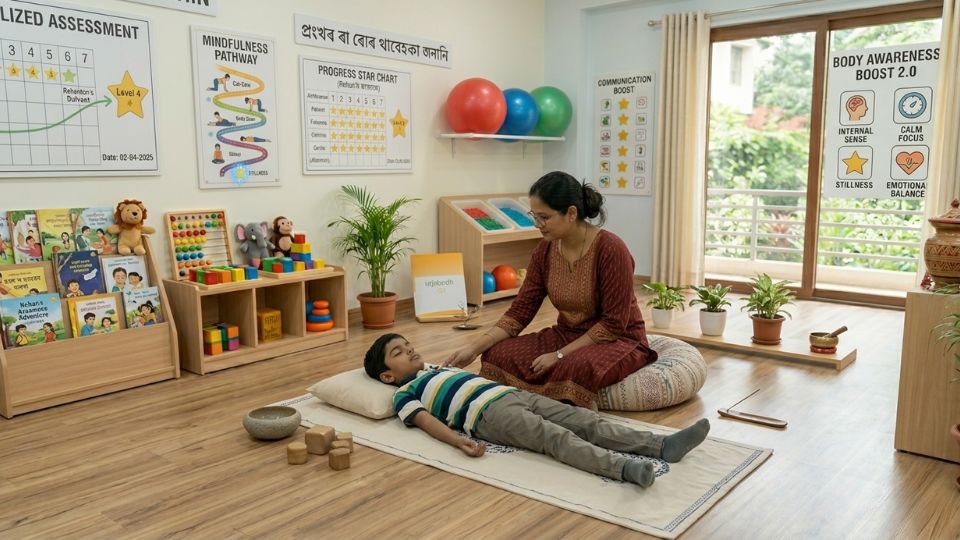
breath work & Chanting
Shwas Abhyas aur Mantra Uccharan
Where stillness becomes strength
The Dhyaan Sutra program integrates breath regulation, vocal resonance, and mindful movement to support a child’s self-regulation, attention, and emotional stability. Rooted in evidence-informed practices from yoga and mindfulness-based interventions, this program focuses on strengthening the connection between the body, breath, and mind.
Through structured sessions, children are guided to develop interoceptive awareness, respiratory control, and nervous system regulation, which are essential for managing stress, improving focus, and enhancing overall well-being.
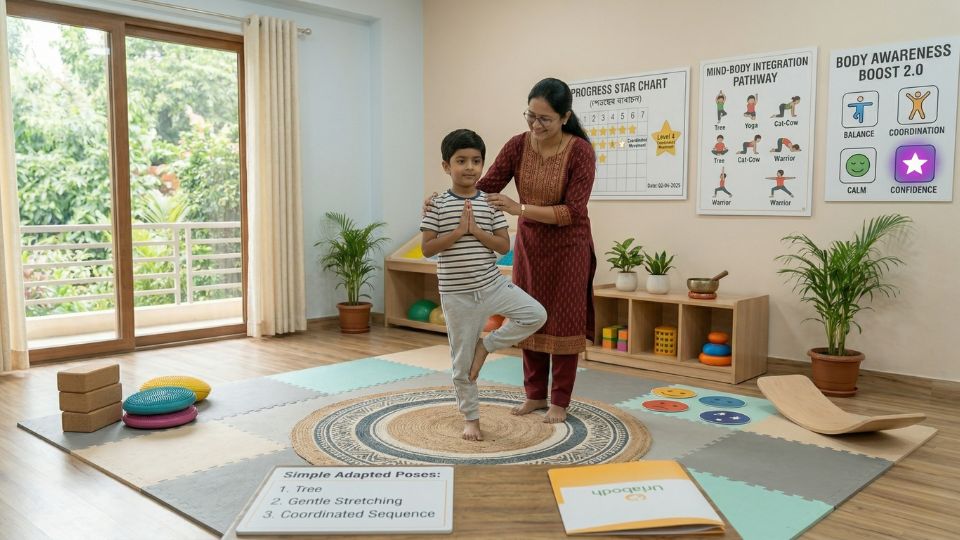
Mind–Body Integration Through Movement
The program incorporates adapted yoga-based postures and movement sequences designed according to each child’s developmental level and physical capacity. These activities aim to improve postural control, balance, coordination, motor planning, and muscle tone.
Movement is introduced with an emphasis on body awareness and controlled transitions, enabling children to develop a better sense of spatial orientation and physical regulation. This supports not only physical development but also enhances attention and readiness for learning tasks.
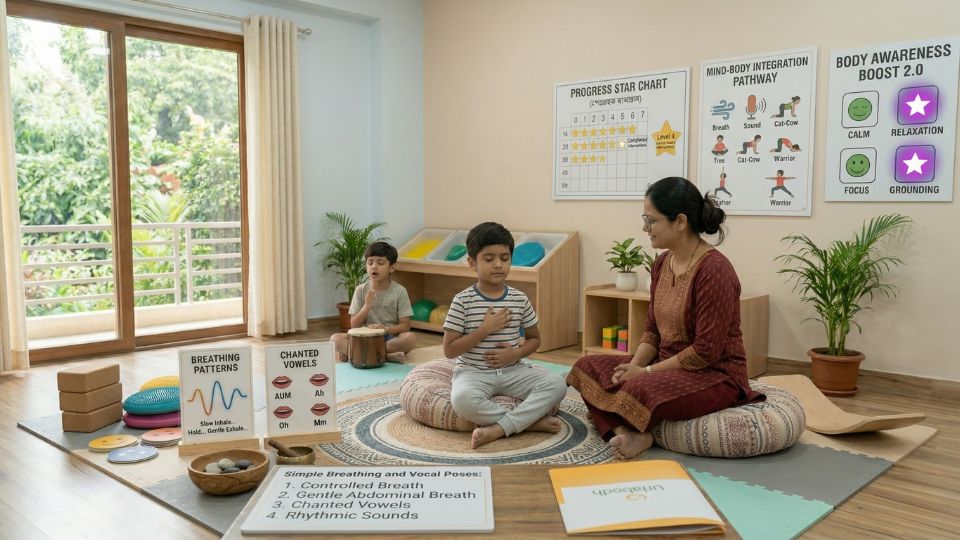
Breath Regulation and Vocal-Based Interventions
A core component of the program involves structured breathing techniques (pranayama) and guided chanting practices. Children are taught to modulate their breath through controlled inhalation and exhalation patterns, which directly influence the autonomic nervous system, promoting relaxation and reducing physiological arousal.
Chanting and sound-based activities utilize rhythm, repetition, and vocal vibration to support emotional grounding, auditory processing, and sustained attention. These practices also enhance respiratory endurance, voice control, and phonation, while creating a predictable and calming sensory experience.
Enhancing Emotional Regulation and Attention
Through consistent practice, children develop improved capacity for:
- Emotional regulation and stress management
- Sustained attention and reduced impulsivity
- Self-awareness and body awareness (interoception)
- Calm behavioural responses in stimulating environments
Breath and sound act as self-regulation tools, enabling children to pause, reset, and respond more adaptively in challenging situations.
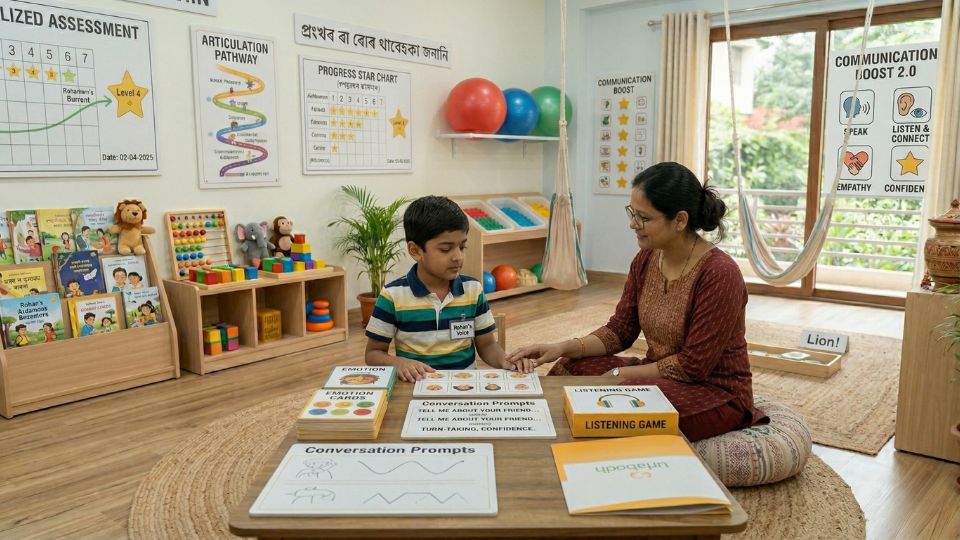
Mindfulness and Internal Awareness
Sessions conclude with guided mindfulness practices such as body scanning, relaxation, and reflective stillness, which help consolidate learning and promote internal awareness. These practices support the development of metacognitive skills, allowing children to recognize their internal states and respond with greater control.
Over time, children are able to generalize these techniques into daily routines, carrying a sense of calm, focus, and emotional balance into their academic, social, and home environments.