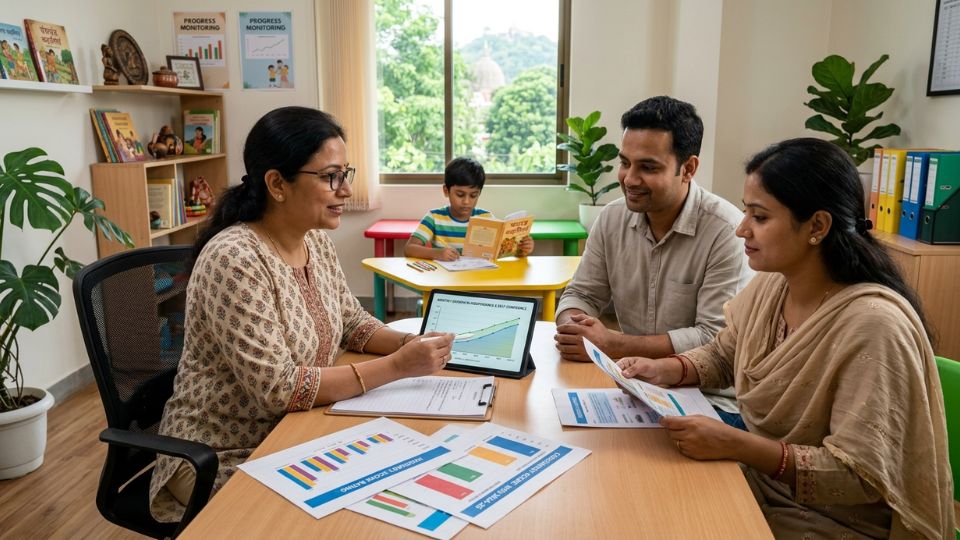
Our Remediation program is a structured, evidence-informed intervention designed to address gaps between a child’s current level of functioning and expected academic competencies. The program focuses on strengthening foundational learning domains—including literacy (reading, writing, comprehension), numeracy (number sense, operations), and cognitive processes such as attention, memory, and logical reasoning. By combining individualized instruction with continuous assessment, we aim to improve both academic performance and underlying learning processes, enabling children to engage more effectively within formal educational settings.
Individualized Education Plans (IEPs)
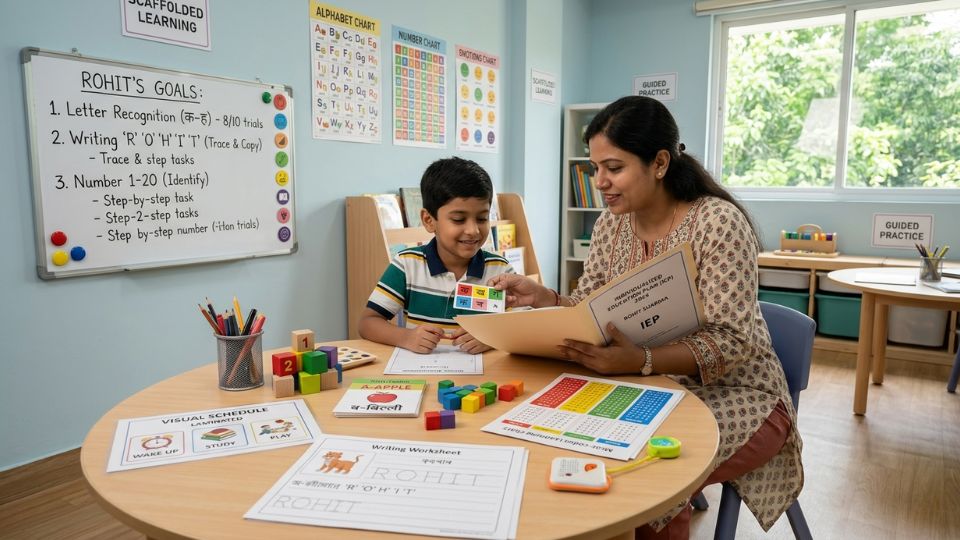
Each child undergoes an initial assessment to identify specific areas of difficulty, learning style, and processing strengths. Based on this, we design a targeted Individualized Education Plan (IEP) with measurable goals and structured progression.
Intervention strategies include:
- Multisensory instruction (visual, auditory, kinesthetic inputs) to enhance retention and concept clarity
- Scaffolded learning to break down complex tasks into manageable steps
- Repetition with variation to promote generalization of skills
- Errorless learning and guided practice to reduce frustration and build accuracy
This structured approach ensures systematic skill acquisition while accommodating each child’s pace.
Cognitive and Skill-Based Interventions
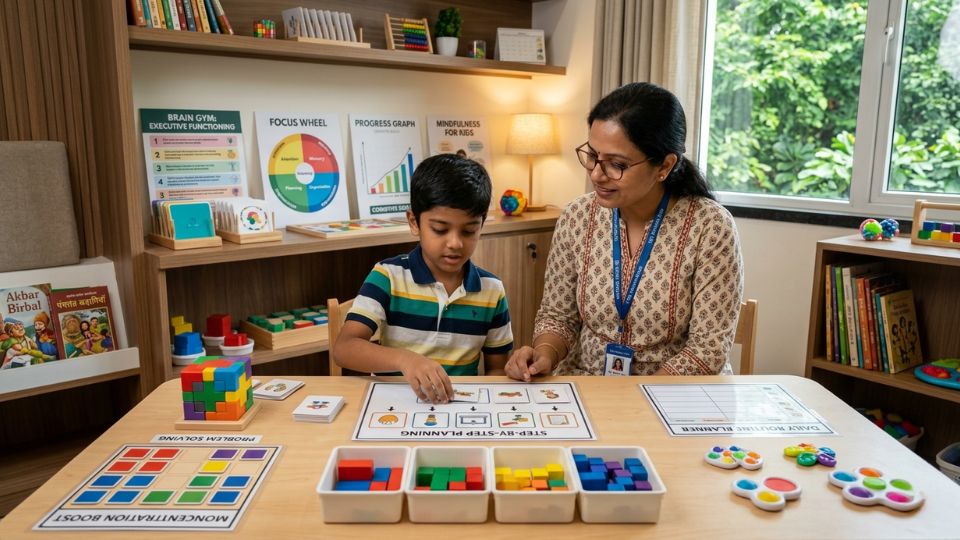
Beyond academic content, the program integrates activities that strengthen core cognitive functions essential for learning:
- Attention and concentration training
- Working memory enhancement tasks
- Executive functioning skills (planning, organization, task initiation)
- Processing speed and problem-solving abilities
These components are embedded within sessions through structured tasks, interactive tools, and therapeutic activities, ensuring that learning challenges are addressed at both the skill and process level.
Engagement Through Structured Play
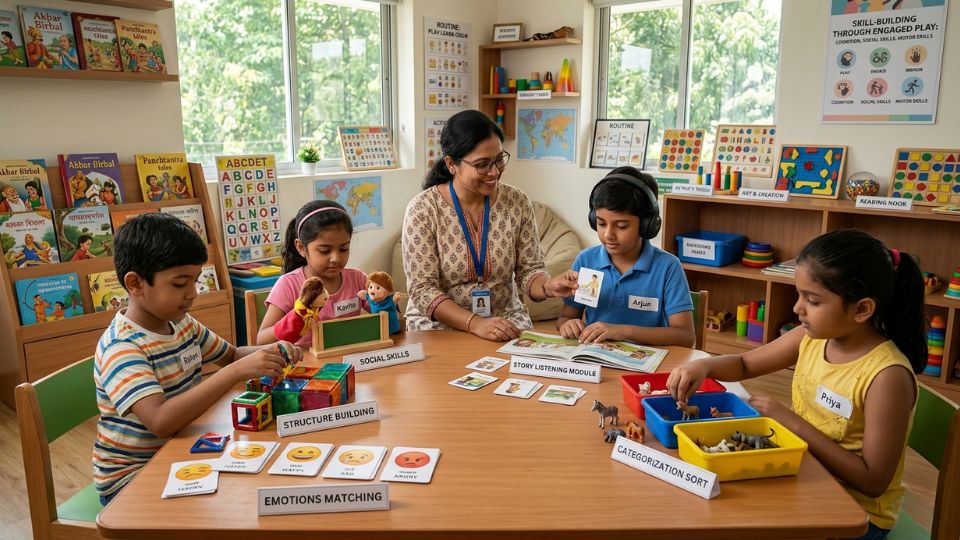
Research highlights the effectiveness of play-based and experiential learning in improving engagement and retention. Our sessions incorporate:
- Goal-oriented games
- Story-based learning modules
- Activity-based reinforcement techniques
These methods are not just recreational—they are carefully designed to support skill consolidation, motivation, and sustained attention, particularly for children who struggle with traditional instructional formats.
Progress Monitoring and Outcome Focus
Progress is tracked through ongoing assessments, session observations, and periodic reviews, allowing for timely modifications in intervention strategies.
The program aims to achieve:
- Improved academic accuracy and fluency
- Increased task persistence and reduced avoidance behaviors
- Enhanced self-efficacy and learner autonomy
Ultimately, the goal is to equip children with the skills, strategies, and confidence required to function independently and successfully within academic and everyday contexts.