We conceptualize behaviour as a form of communication that reflects a child’s internal state, unmet needs, and interaction with their environment. The Aacharan Shuddhi program is a structured, evidence-based intervention designed to assess and modify behaviours while building adaptive skills.
The program focuses on enhancing self-regulation, emotional awareness, and socially appropriate behaviours, enabling children to respond to situations in a more functional and meaningful manner.
Functional Understanding of Behaviour
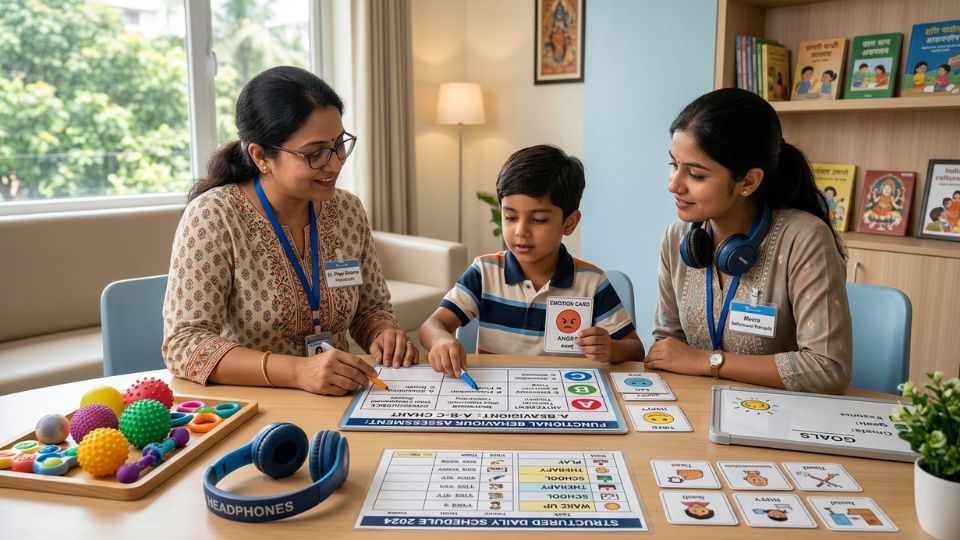
Intervention begins with an understanding of behaviour using the ABC framework (Antecedent–Behaviour–Consequence) to systematically analyse behaviour patterns.
This helps identify underlying factors such as:
- Sensory processing needs
- Communication deficits
- Emotional triggers or dysregulation
- Environmental influences
Based on these insights, we develop Individualized Behaviour Intervention Plans (BIPs) that emphasize teaching appropriate replacement behaviours while reducing maladaptive responses like aggression, avoidance, or impulsivity.
Integrated Evidence-Based Interventions
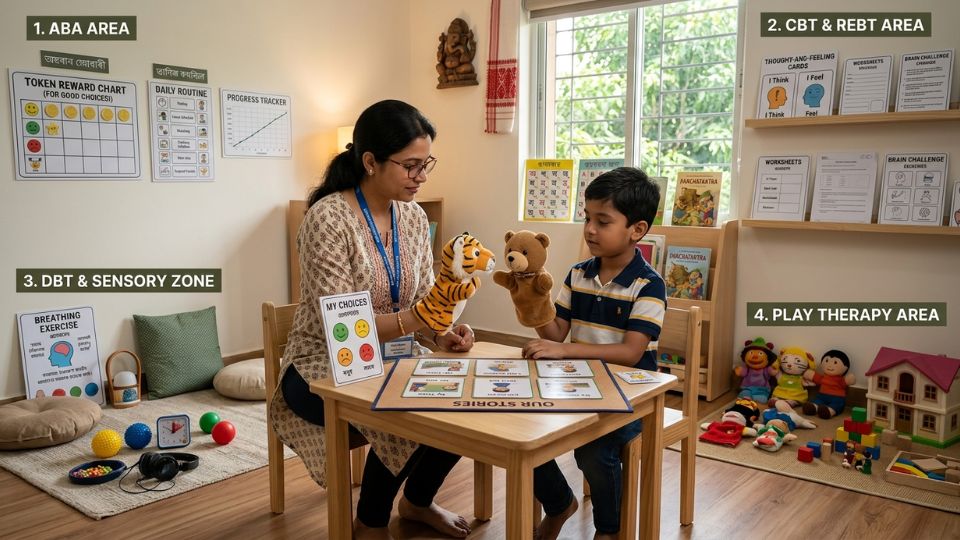
Our approach combines multiple scientifically supported therapeutic models to address behaviour holistically:
- Applied Behaviour Analysis (ABA): Reinforcement-based strategies for behaviour shaping and skill acquisition
- Cognitive Behavioural Therapy (CBT): Building awareness of thoughts, emotions, and behaviours
- Dialectical Behaviour Therapy (DBT): Developing emotional regulation, distress tolerance, and interpersonal effectiveness
- Rational Emotive Behaviour Therapy (REBT): Challenging irrational beliefs and promoting adaptive thinking patterns
- Play Therapy: Facilitating emotional expression and processing through structured and symbolic play
- Social Learning Theory-based Interventions: Using modeling, imitation, and observational learning to build appropriate behaviours
Interventions are implemented through:
- Visual supports and structured routines
- Task analysis and graded skill development
- Reinforcement systems (token economies, contingency management)
- Role-play, modeling, and guided practice
This integrative framework ensures interventions are developmentally appropriate, individualized, and generalizable.
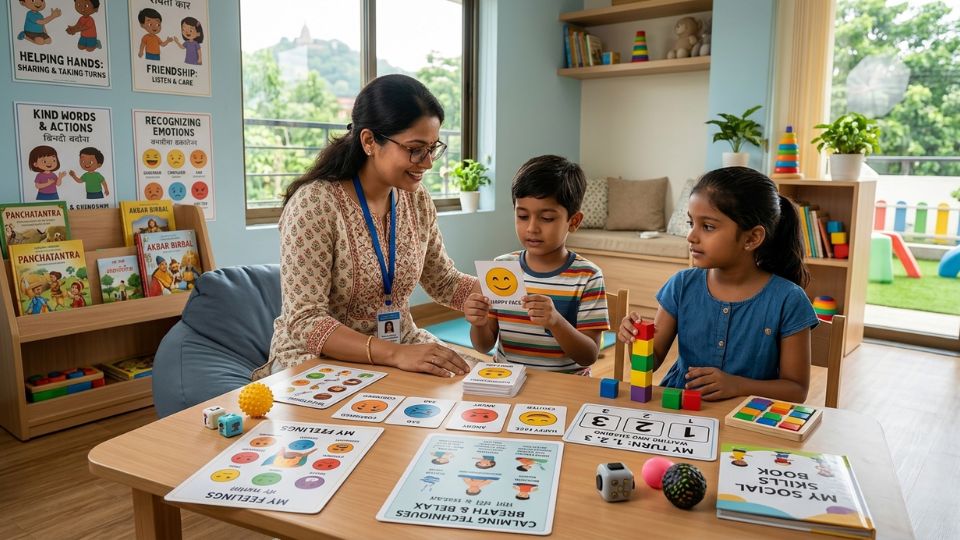
Developing Self-Regulation and Social Competence
A core objective of therapy is to strengthen:
- Emotional regulation and expression
- Impulse control and behavioural inhibition
- Social communication and peer interaction skills
- Problem-solving and coping strategies
Children are guided to develop the ability to recognize, label, and modulate their emotions, enabling more adaptive responses across situations.
Consistency Across Environments
Behavioural change is most effective when supported across all settings. We work collaboratively with parents, caregivers, and educators to ensure consistency and generalization of skills by:
- Training caregivers in behaviour management techniques
- Providing structured strategies for home and classroom implementation
- Aligning reinforcement systems and expectations across environments
Regular monitoring and feedback loops allow for data-driven modifications and sustained progress.

Outcome-Oriented Progress
With structured and consistent intervention, children demonstrate:
- Reduction in frequency and intensity of challenging behaviours
- Improved attention, compliance, and task engagement
- Enhanced social participation and relationship-building skills
- Increased self-awareness, emotional control, and confidence
Our goal extends beyond behaviour modification to fostering independent, emotionally resilient individuals who can understand and regulate their own actions effectively.